A Sermon Delivered on March 29, 2026 by the Rev. Dr. Patrick H. Wrisley
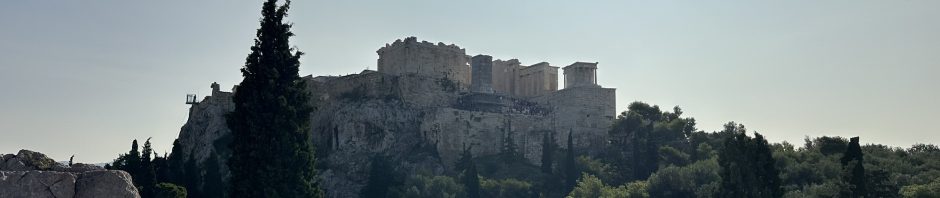
Looking forward to your left and to the West, you see the gleaming marble of the Temple. On your right towards the east, rising a bit higher than the city of Jerusalem, is the Mount of Olives. Just on the other side of the Mount of Olives are a few small villages called Bethany and Bethpage. Continuing down to the mountain towards Jericho is what the locals call the Road of Fire. A hot desolate road meandering through the Judean wilderness winding its way to the Jordan River.
This was the road Jesus took as he was summoned to come and heal his friend Lazarus. Who knows that he might have been staying with Lazarus, Martha, and Mary the night before in Bethany. He and his companions have come close to the summit of the Mount of Olives and this is where Matthew picks up in his Story. Listen to the Word of the Lord as it describes the moment when Love rode into town.
Matthew 21:1-11
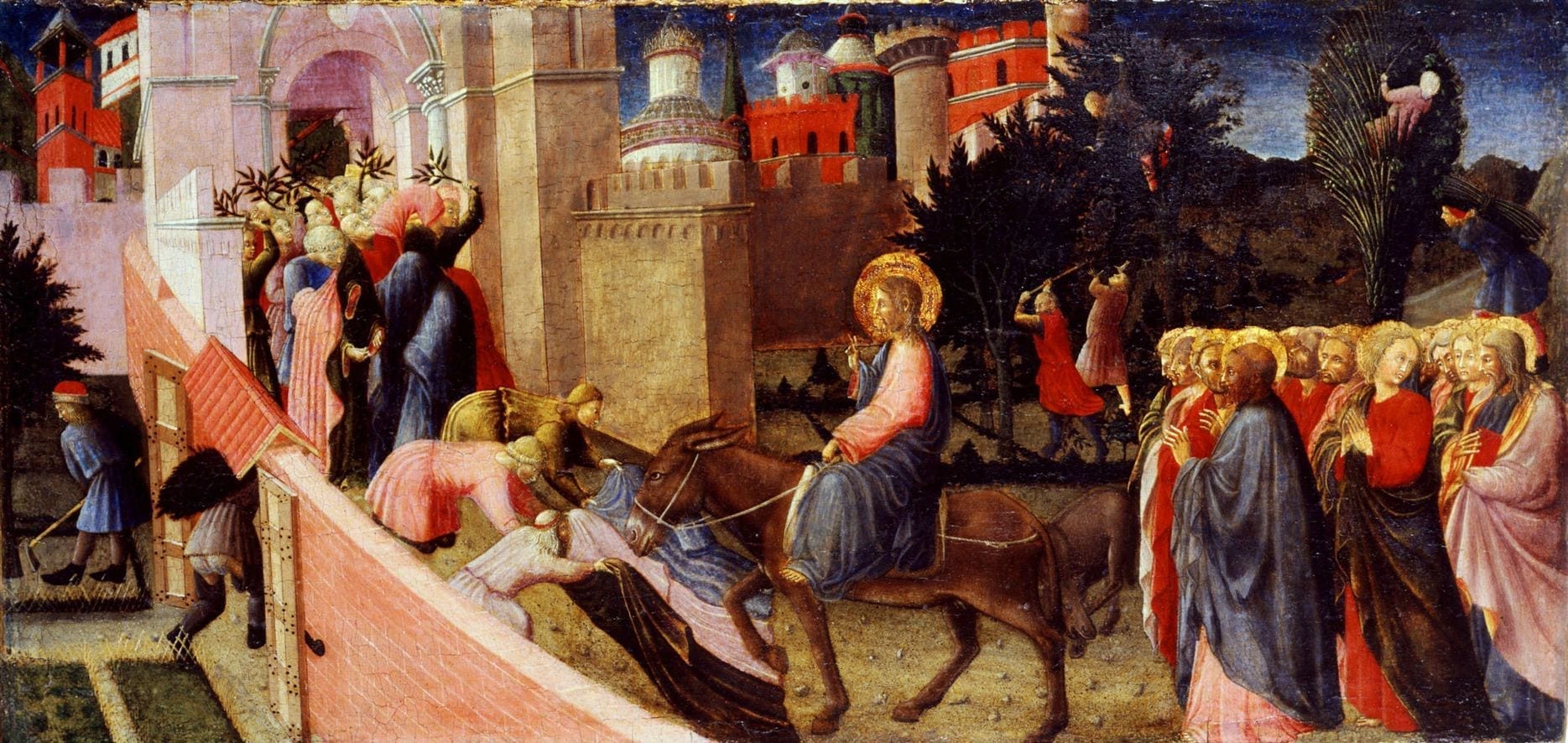
21 When they had come near Jerusalem and had reached Bethphage, at the Mount of Olives, Jesus sent two disciples, 2 saying to them, “Go into the village ahead of you, and immediately you will find a donkey tied, and a colt with her; untie them and bring them to me. 3 If anyone says anything to you, just say this, ‘The Lord needs them.’ And he will send them immediately.” 4 This took place to fulfill what had been spoken through the prophet (Zechariah), saying,
5 “Tell the daughter of Zion, Look, your king is coming to you,humble, and mounted on a donkey,and on a colt, the foal of a donkey.”
6 The disciples went and did as Jesus had directed them; 7 they brought the donkey and the colt, and put their cloaks on them, and he sat on them. 8 A very large crowd spread their cloaks on the road, and others cut branches from the trees and spread them on the road. 9 The crowds that went ahead of him and that followed were shouting, (quoting Psalm 118),
“Hosanna to the Son of David!Blessed is the one who comes in the name of the Lord! Hosanna in the highest heaven!”
10 When he entered Jerusalem, the whole city was in turmoil, asking, “Who is this?” 11 The crowds were saying, “This is the prophet Jesus from Nazareth in Galilee.
12 Then Jesus entered the temple and drove out all who were selling and buying in the temple, and he overturned the tables of the money-changers and the seats of those who sold doves. 13 He said to them, ‘It is written (in Isaiah and Jeremiah),
“My house shall be called a house of prayer”;
but you are making it a den of robbers.’
Anglican scholar, N.T. Wright, has a book entitled, The Day the Revolution Began, and if we were there, we could feel that type of energy building up in the crowds. Jesus sitting atop a donkey is surrounded by throngs of people and could look west and see the Temple and the walls of Jerusalem rising up out of the Kidron Valley he was about to descend into. Scanning the crowd he saw a few faces he knew; the Twelve were no doubt nearby but there were just too many faces, so much cheering and singing for Jesus to make out all who were there.
Like the young couple who got married here last week, they were too wrapped up into the moment to notice all the friends and family who had gathered to celebrate their wedding. A couple enters a time vacuum where the event is so large for them at that moment all they are aware of is putting one foot in front of the other and making sure they say the right thing at the right time. It is why near the end of the wedding service, I have the couple turn and face all those who gathered and really soak it in. I want them to have a hard stop so they can see, not just faces, but the actual people who made the commitment to come and support them on their big day.
I do not imagine there was a hard stop for Jesus that day as he was getting swept up into something that was much larger than he was. Jesus knew he was on a mission for his Heavenly Father but the folks around him had their own agenda.
To begin with, there are Jesus’ close disciples. They have been directly tutored and taught by their friend and Rabbi but even they did not fully understand the sacrifice Jesus was going to make. All they knew is that they were like the special wedding attendants to the groom and held a special place in the groom’s life and heart. Soon James and his brother John would argue with one another who was going to be Jesus’ right hand man when Jesus came to power and their mother would soon pull Jesus aside and ask him for a decision. Peter, who Jesus specifically called the Rock and foundation of the Church, no doubt heard of the Zebedee brothers angling for position and must have wondered what that meant for him. Already rifts were beginning within the inner circle and fellowship about who was more important than the others. Pride, ego, and jockeying for position was infecting the Twelve.
But most of the people in the thronging crowds were the hoi polloi, the unnamed masses of people who were witnesses of Jesus’ mighty works and miracles or had heard about all he did. Social media of the first century was simply the rumor mill and word of this charismatic preacher, teacher, and healer who could summon power over evil spirits and humble the religious scholars of the day exploded through the thousands and thousands of people making their way to Jerusalem for the upcoming Passover Festival. Word on the street he was the Christ, the Anointed One of David, who was coming to set all things right and reestablish peace, balance, and justice in their homeland.
Who else was there that day? No doubt the religious officials were off to the side disapproving of what was unfolding in front of them. The Sadducees, the Pharisees, the run of the mill rabbis were seeing the masses run to this Nazarene and as more and more fled to follow Jesus, more and more power and influence they welded as religious leaders waned and evaporated. The closer Jesus came to entering the gates of the city, the more intense their insecurity rose. Jesus was upsetting not only the religious status quo but was undermining their social power in and influence. Lord Acton was on the mark when he famously wrote, “Power tends to corrupt, and absolute power corrupts absolutely.”
And less we forget, there were the smug Roman politicians and soldiers watching all this drama unfold before them. Caesar was their Lord and to Caesar their loyalties were committed. In their eyes, Jesus was a political agitator who was calling Roman rule, law, and governance into question. These Palestinian Jews were always a troublesome bunch and the Roman garrisons were sent there to ensure there would be order and peacefulness through brutality and intimidation. Sitting atop their royal horses and Jerusalems high walls, they saw a political threat and potential riots. Jesus’ entrance into the city gave them reason to sharpen their swords.
What a varied group of people. Faithful disciples totally clueless about what was about to go down. Well-meaning followers caught up in the frenzy and the hope Jesus was bringing. Religious leaders fearful this radical rabbi was polluting the Law of God and stealing sheep from their spiritual flocks. Roman political and military leaders only concerned with the Pax Romana and ensuring it was kept at any cost. But there is yet one more group of people gathering that day.
As there are today, there was a group of people who saw something was going on but also had no idea of what it was all about. They were not so much as excited about Jesus as they were anxious of the crowds and armed soldiers. They simply came to Jerusalem for the Passover celebrations because they were expected to go and take part. In church parlance, I would call them Chreasters – those who only come to church on Christmas and Easter.
This morning, we are invited to the Table prepared by the Lord. As we prepare to eat this holy meal, let us reflect upon who we are in the crowd greeting Jesus that fateful day. Pray with me.
© 2026 by Patrick H. Wrisley. Sermon manuscripts are available for the edification of members and friends of First Presbyterian Church of Glens Falls, 8 West Notre Dame Street, Glens Falls, NY 12801. This sermon may not be altered, re-purposed, published or preached without permission. All rights reserved.Were You There When Love Came to Town?



 patrick h wrisley